

Getting Started With Driver Jobs Around the UK
I've spent a fair bit of time behind the wheel for work and it's not always what people expect. Some days you're cruising on empty roads. Other times it's gridlock in the rain and you're wondering why you signed up. From what I've seen, driver jobs in the UK come in all shapes, from local van runs to long haul trucks.
Thing is, you need the right licence first. Most start with a car licence then add on categories for bigger stuff. HGV drivers often go for that CPC card too. Without it, you're stuck on smaller gigs.
Common Types People Actually Do
Delivery van work pops up everywhere, especially with online shopping going nuts. You get routes in cities or suburbs. Pay's steady but you deal with traffic and tight parking spots. Not great if you hate being on your feet part of the day.
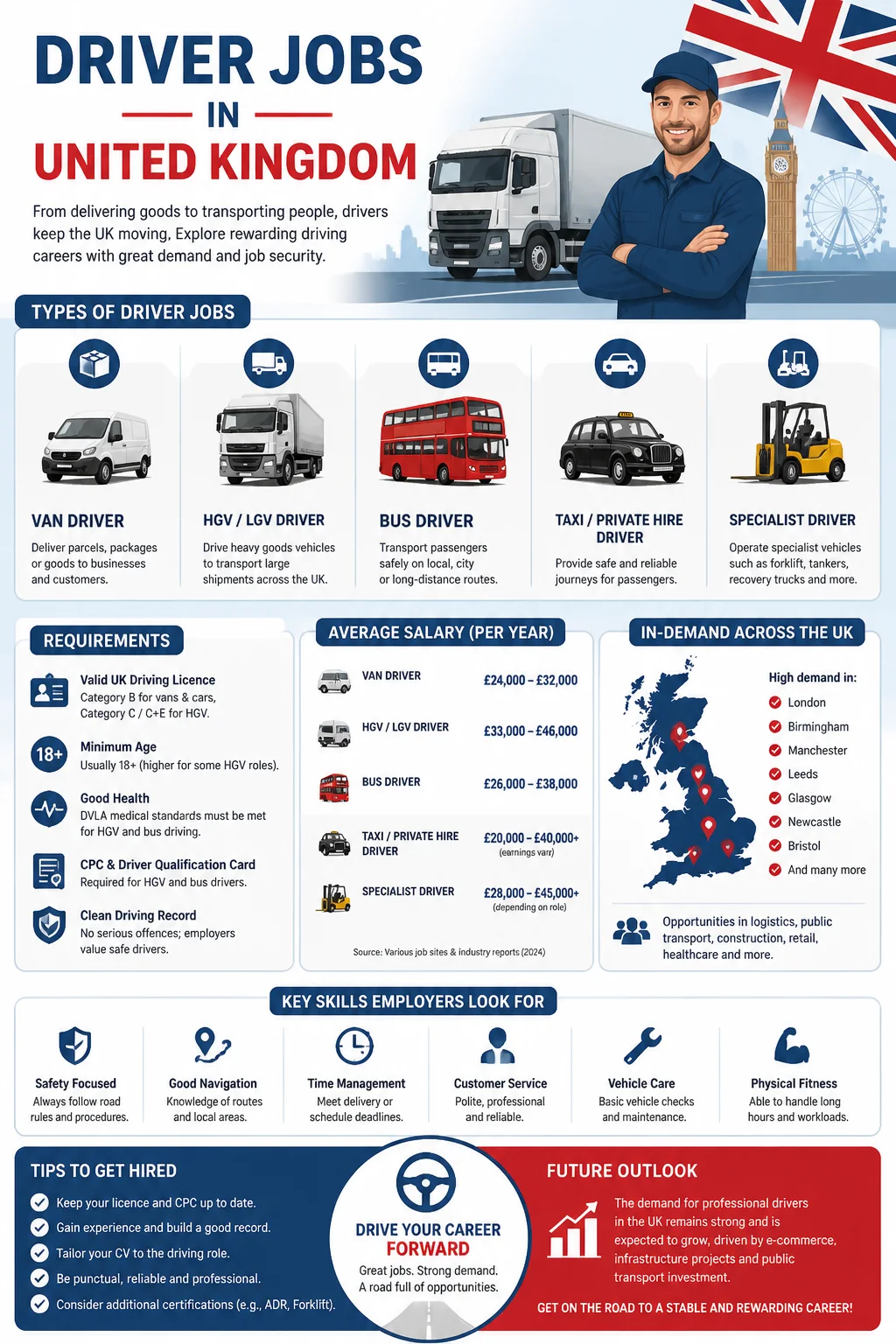
Then there's the big trucks. Those HGV roles pay better in my experience, think thirty five grand and up once you're experienced. But the hours can stretch and you sleep in cabs sometimes. Bus and coach driving is another route, more regular shifts if that's your thing.
- Local courier stuff for quick cash
- Long distance freight when you want the miles
- Taxi or private hire for city folks who know the back roads
Honestly, I tried a mix early on. The variety kept it interesting but switching gigs meant fresh checks each time.
What Pay Looks Like These Days
Salaries vary a ton by location and type. Up north you might clear twenty eight k in a van. Down south or around London it's often more like thirty two to forty. Overtime helps but it eats your evenings.
Agencies throw in perks sometimes like fuel cards or weekend bonuses. Permanent spots with big firms give pension stuff and holiday pay. I've seen mates jump between both depending on what life throws at them.
Real talk though, fuel prices and vehicle wear hit your take home if you're self employed. Keep receipts.
Finding the Right Gig
Job sites list loads but read the small print. Some want night shifts only. Others need clean records for insurance. From what I've seen, local Facebook groups and word of mouth still land decent roles faster than online sometimes.
Agencies can get you started quick. They handle the paperwork but take a cut. Once you have experience, direct company apps work better.
And don't skip the test drives or trial days if offered. It shows you what the actual day feels like before committing.
Big difference when the van or truck matches what you're used to.
Daily Realities Nobody Warns You About
Weather plays a huge part. Fog on motorways or snow in the peaks slows everything. Customers get impatient too, even when roads are bad.
Maintenance checks matter. Tyres, lights, brakes. Skip them and you're looking at fines or worse. I learned that the hard way once with a dodgy van on the M25.
Breaks are regulated for bigger vehicles. Stick to the rules or risk points on the licence. It's boring but keeps you legal.
Getting Qualified and Staying Sharp
New drivers often do training courses for the right category. Costs add up but some companies reimburse after a year. Digital tachographs track everything now so no fudging hours.
Health checks pop up every few years. Eyesight and heart stuff mainly. Stay on top of it.
I've refreshed my knowledge with online modules during quiet weeks. Keeps things fresh without much hassle.
Look, the job changes with tech too. Apps for route planning and load tracking are normal now. Learn the basics or fall behind.
Is It Worth It Long Term
Depends on what you want. Freedom on the road suits some. Others miss the office chat and fixed hours. In my experience, those who treat it like a business do better with side income from mileage claims.
Union options exist for bigger firms if issues come up with pay or conditions. Worth checking out.
Overall it's steady work if you like driving and don't mind early starts. Just plan for the quiet months around holidays.