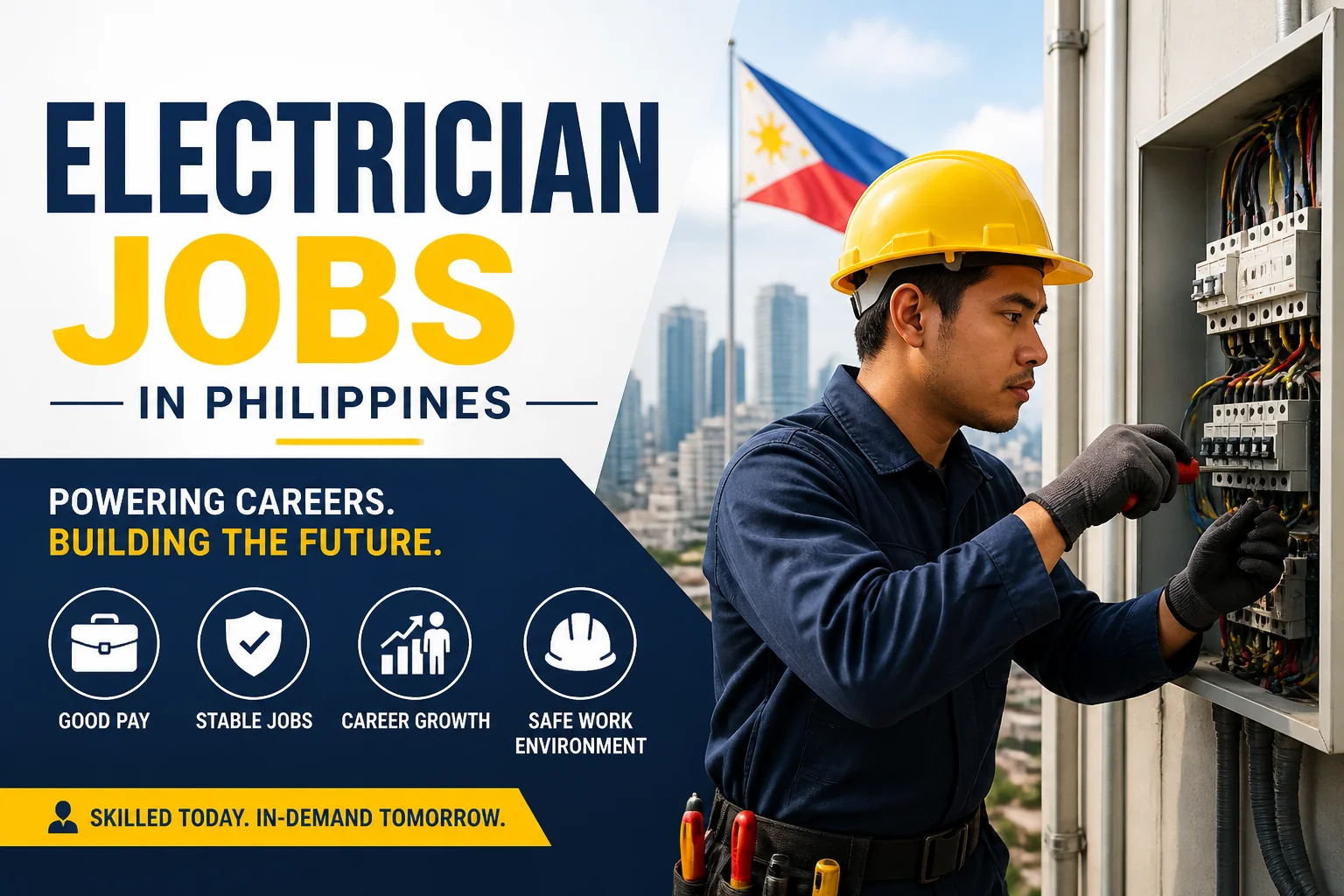

What's the Deal with Electrician Jobs in the Philippines Right Now
Electrician work here has been holding steady for years. Construction keeps booming in cities like Manila and Cebu, and homes always need wiring fixes or upgrades. From what I've seen, plenty of folks get into it after some training and stick around because the demand doesn't really dip much.
Thing is, you don't need a fancy degree. Most start with TESDA certification and build from there. I've known guys who began as apprentices and ended up running their own small crews within five years.
How's the Pay Looking These Days
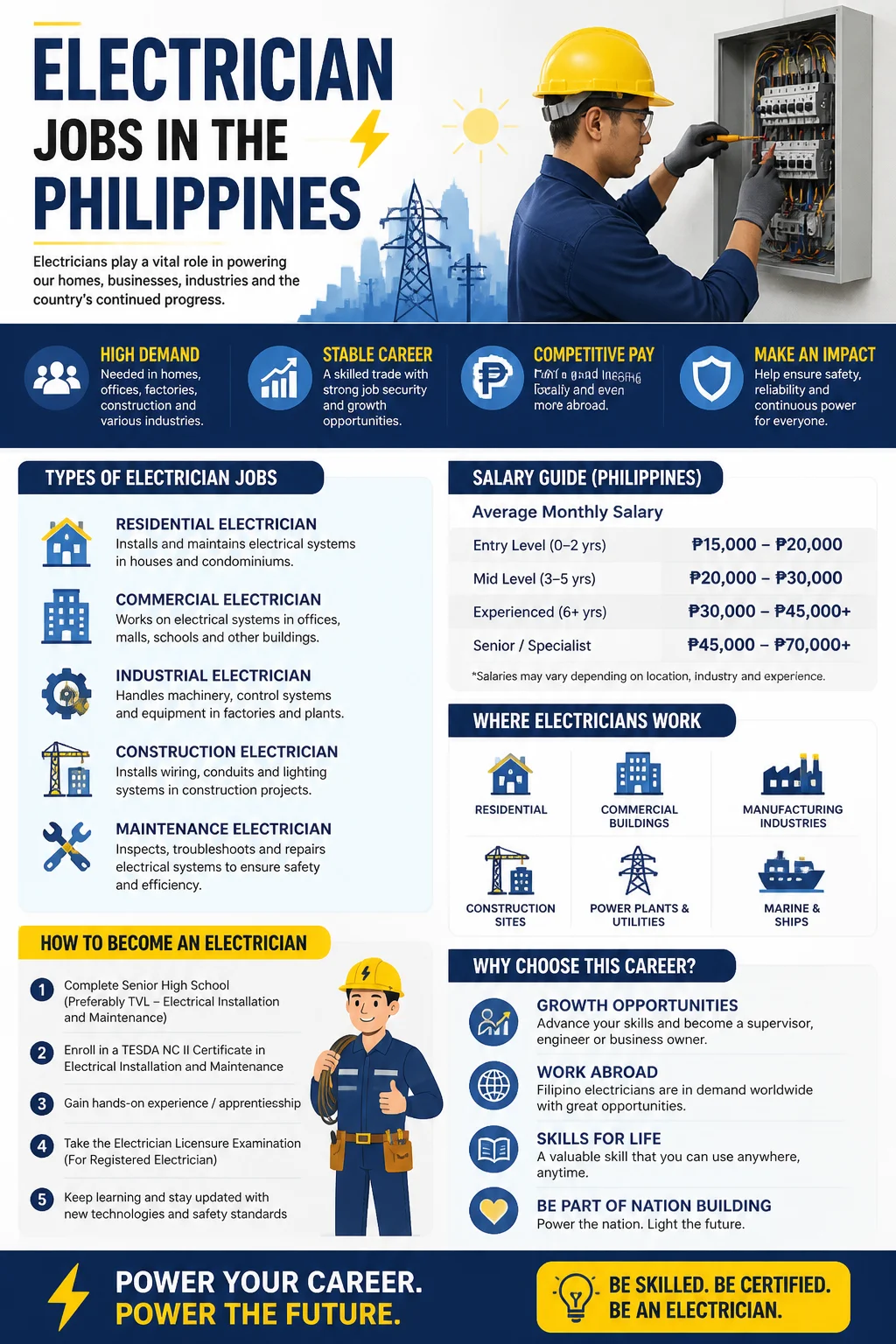
Entry level electricians usually pull around 15k to 20k pesos a month. That's starting out, mind you. Once you rack up experience or land commercial jobs, it jumps to 25k or even 35k. Overtime and project bonuses help a lot too.
Big difference if you're willing to travel for site work outside the metro. Some projects in the provinces offer free lodging plus higher daily rates. Not gonna lie, the numbers feel better when you factor in those extras.
What Affects Your Take Home
Skills matter more than you think. Knowing solar setups or industrial controls gets you noticed fast. And yeah, licensed ones earn more than unlicensed helpers, no question.
- Residential wiring gigs pay decent but steady
- Commercial or factory jobs usually come with benefits
- Freelance side work can add nice extra cash on weekends
Do You Need a License or Special Training
Honestly speaking, a TESDA NC II certificate opens most doors. Without it you're stuck doing helper tasks for lower pay. Some companies ask for PRC license too if you're handling bigger installations.
Training usually takes a few months. Then you get hands-on practice before going solo. I've heard stories of people rushing it and struggling later, so taking your time pays off.
Where to Actually Find These Jobs
Online job boards like JobStreet and Indeed list openings daily. Facebook groups for skilled trades in the Philippines also pop up with leads from contractors. Word of mouth still works wonders though.
Agencies that handle overseas work sometimes recruit too, but local demand stays strong enough for most people. Just keep your resume updated with specific skills like panel board installation or troubleshooting.
Real talk, showing up prepared for interviews with basic tools mentioned helps. Employers notice that stuff quickly.